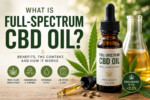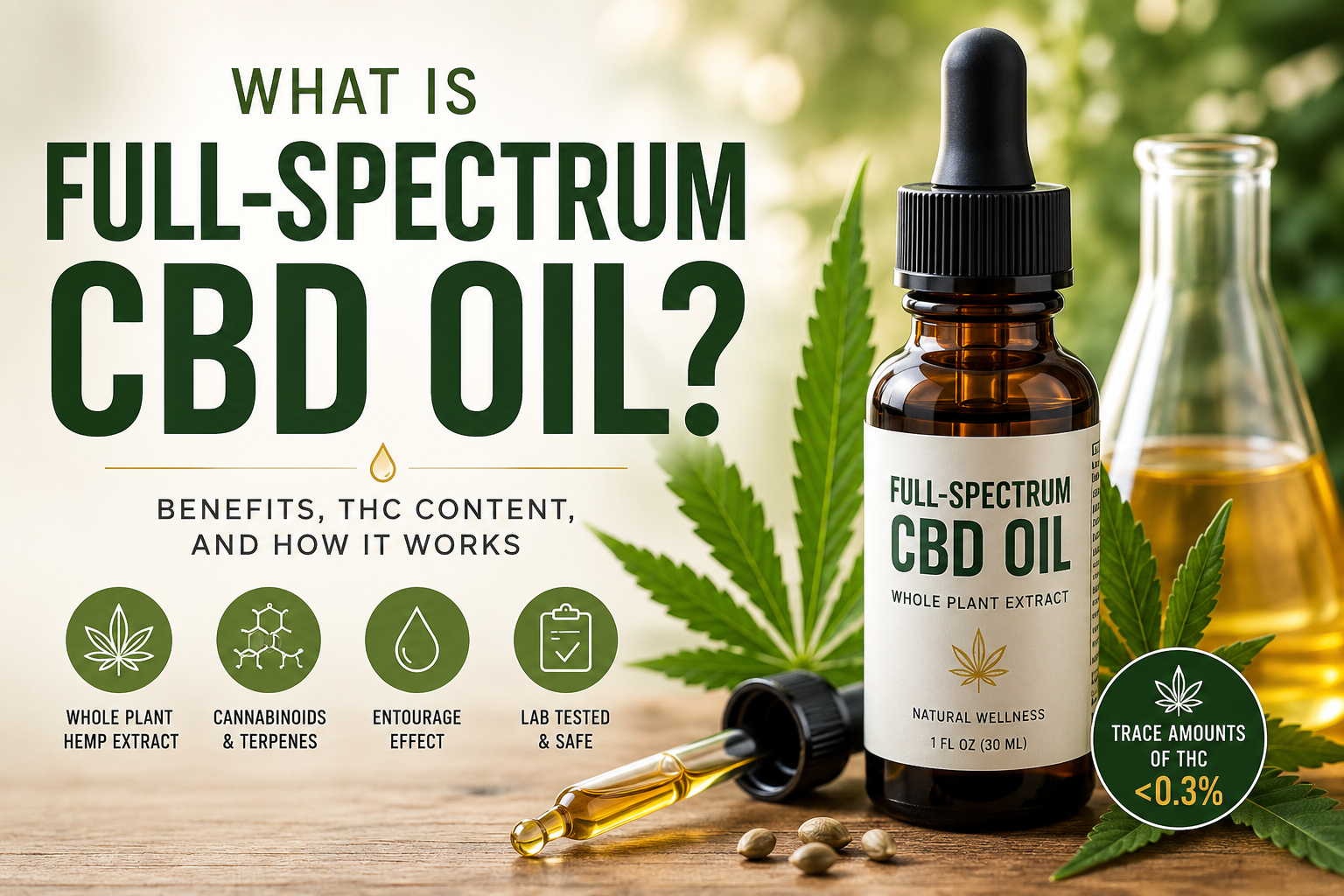
Full-spectrum CBD oil is a hemp-derived extract that contains CBD alongside other naturally occurring hemp compounds, including minor cannabinoids, terpenes, flavonoids, and trace amounts of THC. Unlike CBD isolate, which contains only cannabidiol, full-spectrum products preserve a wider range of compounds from the hemp plant.
Many consumers choose full-spectrum CBD because of the “entourage effect” — the theory that cannabinoids and terpenes may work more effectively together than in isolation. Understanding how full-spectrum CBD works, what it contains, and how it compares to broad-spectrum CBD and CBD isolate can help shoppers choose the right hemp extract for their wellness goals.
Quick Answer
Full-spectrum CBD oil is a whole-plant hemp extract containing CBD, minor cannabinoids, terpenes, flavonoids, and federally legal trace amounts of THC (less than 0.3% in hemp-derived products). It is designed to preserve the plant’s natural compounds and is commonly associated with the “entourage effect,” where cannabinoids and terpenes may work together synergistically.
What Does Full-Spectrum CBD Oil Mean?
The term full-spectrum CBD refers to a hemp extract that retains the broadest possible range of naturally occurring hemp compounds after extraction and processing.
A high-quality full-spectrum CBD oil typically contains:
- CBD (cannabidiol)
- Trace THC
- Minor cannabinoids like CBG, CBN, and CBC
- Terpenes
- Flavonoids
- Natural hemp compounds and phytonutrients
Rather than isolating CBD alone, manufacturers preserve multiple plant compounds to create a more complete hemp extract.
Common Terms Associated With Full-Spectrum CBD
| Term | Meaning |
|---|---|
| Full-spectrum CBD oil | Contains CBD plus additional hemp compounds including THC |
| Broad-spectrum CBD | Similar to full-spectrum but THC is removed |
| CBD isolate | Pure CBD with no other cannabinoids or terpenes |
| Whole plant hemp extract | Extract preserving multiple compounds from hemp |
| Hemp-derived full-spectrum CBD | CBD extracted specifically from federally compliant hemp |
What Does Full-Spectrum CBD Oil Contain?
One of the biggest misconceptions is that full-spectrum CBD is “just CBD with THC.”
In reality, it contains a much broader cannabinoid and terpene profile.
Cannabinoids Commonly Found in Full-Spectrum Hemp Oil
| Compound | Role in Hemp Extract |
|---|---|
| CBD | Primary non-intoxicating cannabinoid |
| THC | Trace federally legal cannabinoid |
| CBG | Minor cannabinoid commonly found in hemp |
| CBN | Cannabinoid often associated with aged hemp extracts |
| CBC | Naturally occurring phytocannabinoid |
| CBDa | Acidic precursor to CBD |
Terpenes Found in Terpene-Rich CBD Oil
Terpenes are aromatic compounds naturally present in hemp and other plants.
Common hemp terpenes include:
- Myrcene
- Limonene
- Caryophyllene
- Pinene
- Linalool
These compounds contribute to:
- aroma
- flavor
- extract complexity
- potential synergistic interactions
How Does Full-Spectrum CBD Oil Work?
Full-spectrum CBD interacts with the body’s endocannabinoid system (ECS) — a complex biological signaling network involved in maintaining internal balance.
The ECS includes:
- cannabinoid receptors
- endogenous cannabinoids
- regulatory enzymes
Researchers believe cannabinoids and terpenes may influence this system differently when combined together versus isolated individually.
The Entourage Effect Explained
The entourage effect is the theory that hemp compounds may work synergistically when consumed together.
Instead of CBD acting alone:
- cannabinoids may complement one another
- terpenes may influence cannabinoid behavior
- whole-plant extracts may create broader effects
Does Full-Spectrum CBD Oil Contain THC?
Yes. Full-spectrum CBD oil typically contains trace amounts of THC.
Under U.S. federal law, hemp-derived CBD products must contain:
- less than 0.3% THC by dry weight
This amount is generally considered non-intoxicating for most users, though effects may vary depending on:
- serving size
- individual sensitivity
- product potency
- frequency of use
Important THC Considerations
Even federally legal full-spectrum CBD may:
- trigger a positive drug test
- affect THC-sensitive individuals
- produce mild psychoactive effects at very high doses
Consumers subject to workplace drug testing often choose:
- broad-spectrum CBD
- THC-free CBD
- CBD isolate
instead of full-spectrum products.
Full-Spectrum CBD vs Broad-Spectrum CBD
One of the most common buyer questions is whether full-spectrum or broad-spectrum CBD is better.
The answer depends on the user’s priorities.
| Feature | Full-Spectrum CBD | Broad-Spectrum CBD |
|---|---|---|
| Contains CBD | Yes | Yes |
| Contains THC | Yes (trace amounts) | Typically removed |
| Contains terpenes | Yes | Yes |
| Contains minor cannabinoids | Yes | Yes |
| Entourage effect potential | Higher | Moderate |
| Drug test risk | Higher | Lower |
Who Often Chooses Full-Spectrum CBD?
- whole plant hemp extract
- maximum cannabinoid diversity
- terpene-rich CBD oil
- more complete hemp profiles
Who Often Chooses Broad-Spectrum CBD?
- THC-free formulations
- lower drug test risk
- hemp compounds without THC exposure
Full-Spectrum CBD vs CBD Isolate
CBD isolate contains only purified cannabidiol.
Everything else is removed:
- THC
- terpenes
- flavonoids
- minor cannabinoids
Key Differences
| Feature | Full-Spectrum CBD | CBD Isolate |
|---|---|---|
| Whole-plant compounds | Yes | No |
| Terpenes | Yes | No |
| Minor cannabinoids | Yes | No |
| THC | Trace amounts | None |
| Flavor profile | Natural hemp taste | Neutral |
| Processing level | Lower | Higher |
Full-Spectrum CBD Oil Benefits
Research into hemp cannabinoids is still evolving, and no over-the-counter CBD product is FDA-approved to diagnose, treat, cure, or prevent disease.
However, consumers commonly choose full-spectrum CBD oil for wellness-focused reasons such as:
- relaxation support
- recovery routines
- stress management
- daily balance
- evening wellness rituals
Why Some Users Prefer Full-Spectrum Products
- broader cannabinoid exposure
- terpene-rich formulas
- whole plant hemp extract profiles
- entourage effect potential
- less heavily processed extracts
Misconceptions About Full-Spectrum CBD
“Full-Spectrum CBD Gets Everyone High”
Not necessarily.
Federally compliant hemp-derived CBD contains only trace THC. Most users do not report intoxicating effects at standard serving sizes.
“More Cannabinoids Always Means Better”
Not always.
The “best” CBD format depends on:
- sensitivity
- wellness goals
- lifestyle
- tolerance
- testing concerns
“All Full-Spectrum CBD Oils Are the Same”
Quality varies dramatically.
Differences may include:
- extraction method
- terpene preservation
- cannabinoid profile
- hemp sourcing
- testing standards
How To Choose the Best Full-Spectrum CBD Oil
Look for These Features
Third-Party Testing
Choose lab-tested full-spectrum CBD with:
- cannabinoid analysis
- THC verification
- contaminant screening
CO2 Extraction
CO2 extracted full-spectrum CBD is commonly preferred because:
- it avoids harsh solvents
- preserves delicate hemp compounds
- supports cleaner extraction processes
Organic Hemp Sources
Organic full-spectrum CBD oil may reduce exposure to:
- pesticides
- heavy metals
- agricultural contaminants
Clear Certificates of Analysis (COAs)
Reputable brands provide:
- batch-specific testing
- accessible lab reports
- transparent cannabinoid data
Full-Spectrum CBD Tincture vs Other Product Types
| Product Type | Description |
|---|---|
| CBD tincture | Oil-based liquid taken sublingually |
| Gummies | Pre-measured edible format |
| Capsules | Convenient measured servings |
| Softgels | Easy-to-swallow alternative |
| Topicals | Creams and balms are applied externally |
Is Full-Spectrum CBD Federally Legal?
Hemp-derived full-spectrum CBD products containing less than 0.3% THC are federally legal under the 2018 Farm Bill in the United States.
However:
- State laws vary
- Some jurisdictions restrict hemp cannabinoids
- THC regulations differ by region
Important Things to Know Before Buying Full-Spectrum CBD
Drug Testing Risks
Even trace THC may accumulate over time.
Flavor Expectations
Full-spectrum CBD often has:
- earthy notes
- herbal bitterness
- strong hemp flavor
Product Color Differences
Natural hemp extracts vary in color:
- amber
- gold
- dark brown
- greenish hues
“Hemp Seed Oil” Is Not the Same as CBD Oil
Hemp seed oil contains little to no CBD, while full-spectrum CBD oil contains cannabinoid-rich hemp extract.
How Full-Spectrum CBD Fits Into a Daily Wellness Routine
Many consumers incorporate CBD into broader wellness habits, such as:
- evening routines
- post-workout recovery
- mindfulness practices
- stress-management rituals
Practical tips include:
- starting with low serving sizes
- monitoring individual response
- choosing consistent routines
- purchasing from transparent brands
Conclusion
Full-spectrum CBD oil is a whole-plant hemp extract containing CBD alongside cannabinoids, terpenes, flavonoids, and trace THC. Unlike CBD isolate, it preserves a broader range of hemp compounds that may contribute to the entourage effect.
For many consumers, full-spectrum CBD offers a more complete hemp profile and a less heavily refined option compared to isolate-based products. However, THC sensitivity, drug testing concerns, and personal preferences all play important roles in choosing the right CBD format.
FAQs
What is full-spectrum CBD oil?
Full-spectrum CBD oil is a hemp extract containing CBD, minor cannabinoids, terpenes, flavonoids, and trace THC.
Does full-spectrum CBD contain THC?
Yes. Hemp-derived full-spectrum CBD products legally contain less than 0.3% THC by dry weight in the United States.
Can full-spectrum CBD show up on a drug test?
Potentially, yes. Even trace THC may accumulate with repeated use and could trigger a positive drug screening.
What is the entourage effect in CBD?
The entourage effect refers to the theory that cannabinoids, terpenes, and other hemp compounds may work more effectively together than individually.
Is full-spectrum CBD better than broad-spectrum CBD?
Neither is universally better. Full-spectrum contains THC and offers a broader hemp profile, while broad-spectrum removes THC and may reduce drug test concerns.
What’s the difference between full-spectrum CBD and CBD isolate?
Full-spectrum CBD contains multiple hemp compounds, while CBD isolate contains only purified CBD with no additional cannabinoids or terpenes.
Is full-spectrum CBD federally legal?
Hemp-derived full-spectrum CBD with less than 0.3% THC is federally legal in the United States, though state laws may vary.
What should you look for in a full-spectrum CBD product?
Look for third-party testing, transparent COAs, organic hemp sourcing, CO2 extraction, and verified cannabinoid content.